By Tim Spalding in Deep Dives
October 5, 2026
“Beach reads” are like “beach bodies.” If your body is at the beach, it’s a beach body. If you read a book at the beach, it’s a “beach read”!
Publishers, however, have built a well-defined “beach read” track—a succession of books by popular authors published for the summer season. Booksellers and librarians know this, but we wanted to put some data behind the phenomenon. So we pulled sixteen authors known for summer books—eight romance and eight thriller—and tracked patron interest in everything they’ve written, new and old, from the start of 2022 through this past August, using the same data behind our monthly Top Titles posts. The data is fun, and several discoveries popped out.
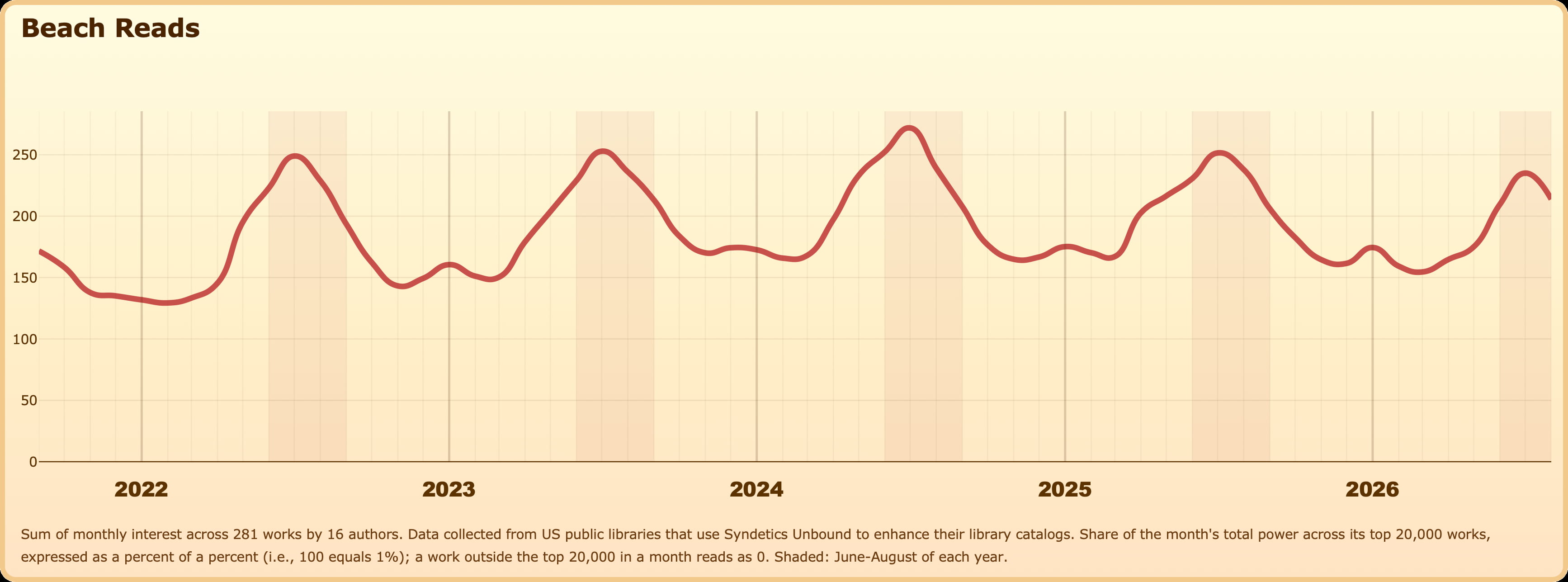
First, the big picture. Here is library patron interest in titles by sixteen well-known summer authors. Every summer gets its hump, and every hump lands inside the shaded June–August band.
Now let’s dive into some of the authors.
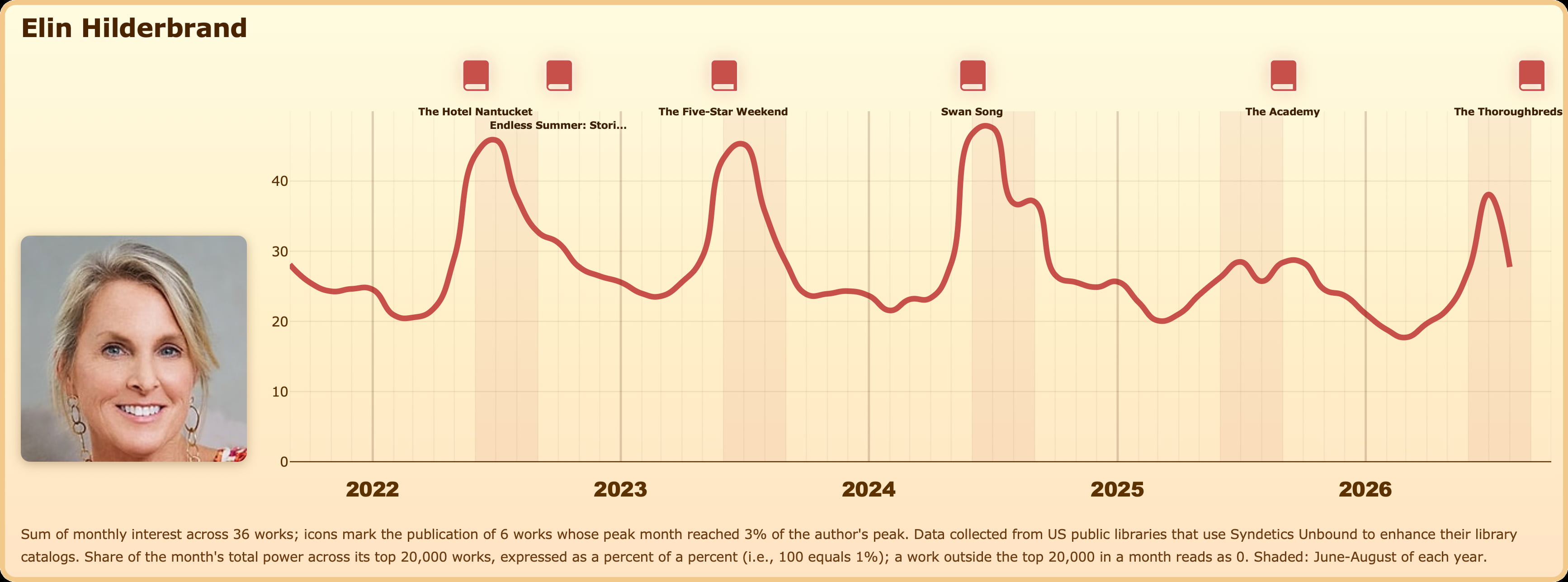
Elin Hilderbrand has been called the “Queen of the Beach Read” for two decades, and her beach chair is June. The Hotel Nantucket, The Five-Star Weekend and Swan Song all came out between June 11 and June 14—as did 28 Summers and Golden Girl before them, in 2020 and 2021. Her popularity is enormous: across thirty-six books she has the largest total audience of anyone in the study, and each of her three June novels here is the tallest thing on its year’s chart. Since Swan Song, though, Nantucket has moved. Her last two novels, The Academy and The Thoroughbreds, written with her daughter, came out in September. And notice the bump this past summer with no book beside it: that’s Peacock’s adaptation of The Five-Star Weekend, which premiered in July and sent patrons back to a three-year-old novel.
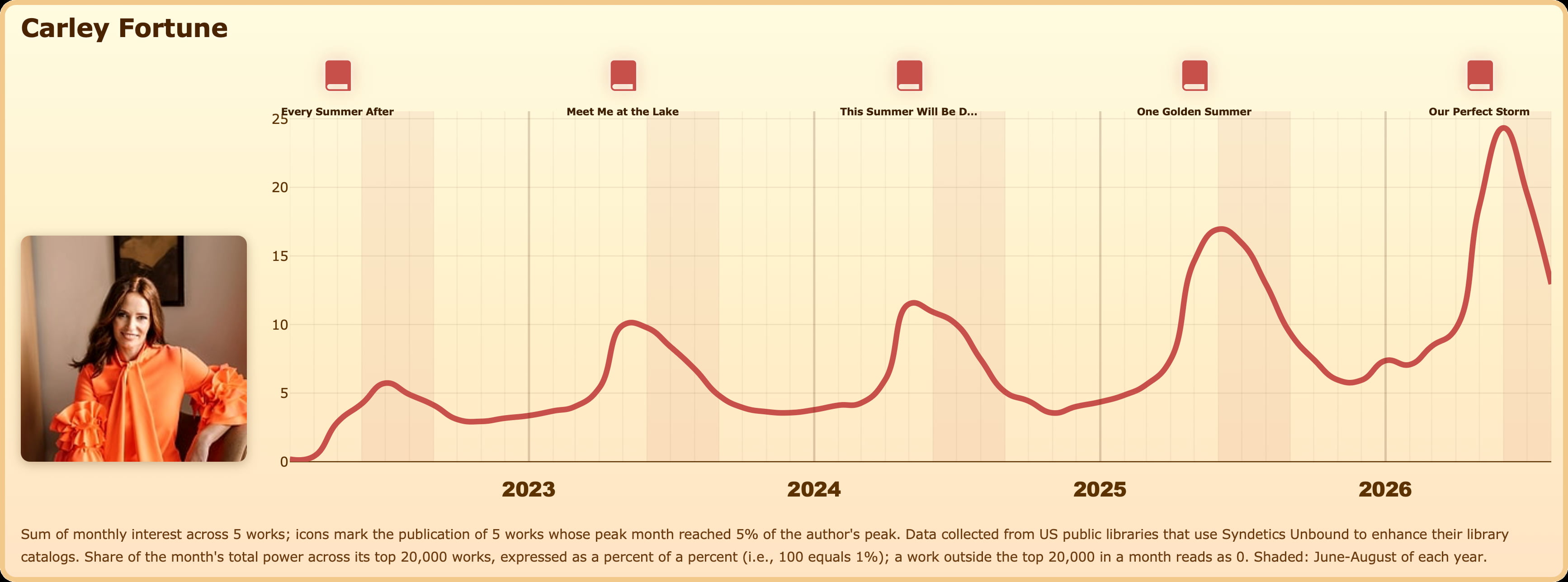
As you can see, Hilderbrand’s chart is complicated by some extra, non-summer books. Carley Fortune, who writes contemporary romance set on Canadian lakes and beaches, is the better illustration of the phenomenon. Since 2022 she has published five novels in May: Every Summer After, Meet Me at the Lake, This Summer Will Be Different, One Golden Summer and Our Perfect Storm. They came out on May 10, May 2, May 7, May 6 and May 5—an entire career inside nine days.
And patrons know. If you look closely you can see the line rising before publication, as patrons find the pre-publication records on library catalogues and put them on their holds lists. Then interest crests the month after the book arrives—which is true of almost every author here, and is worth holding onto. Each peak is taller than the last. The chart is a rising, seasonal metronome.
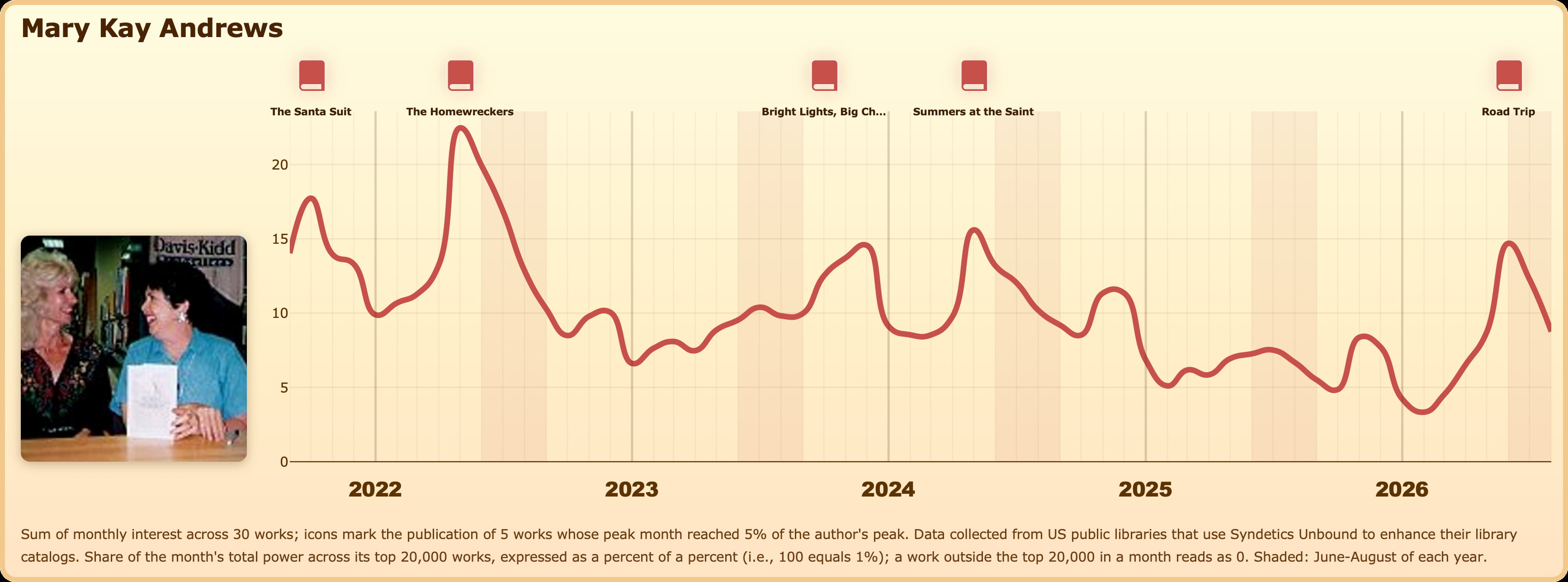
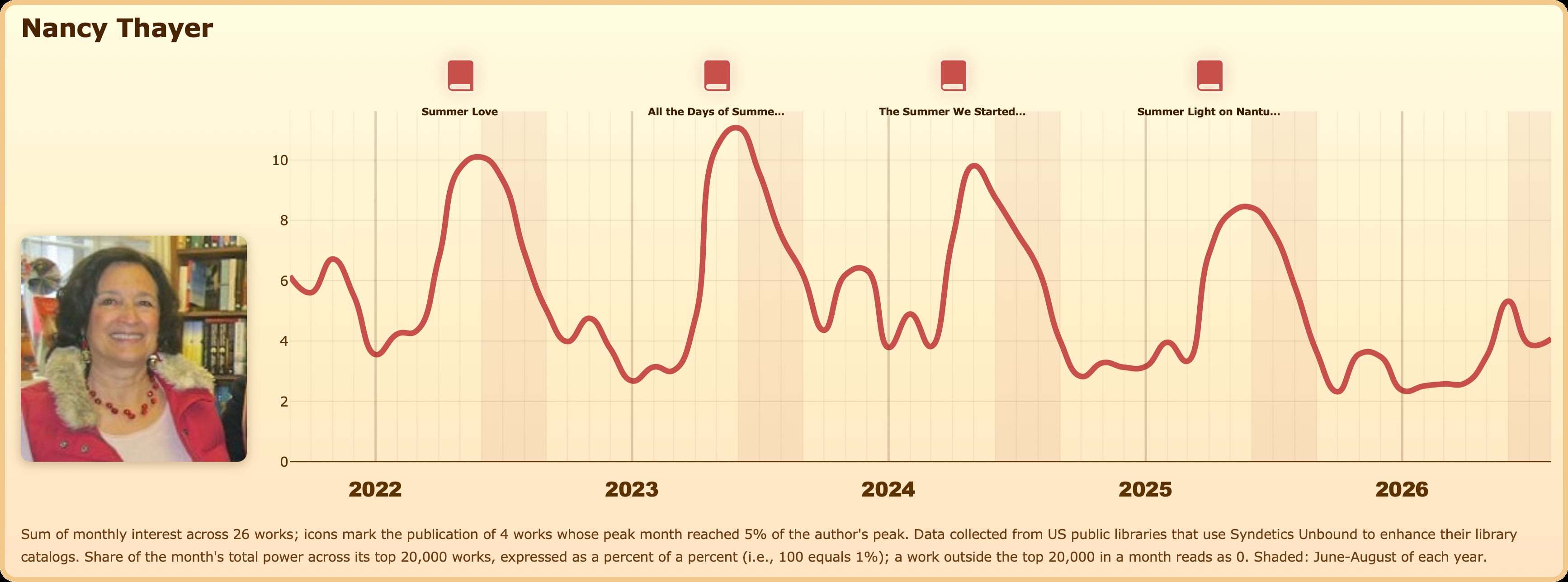
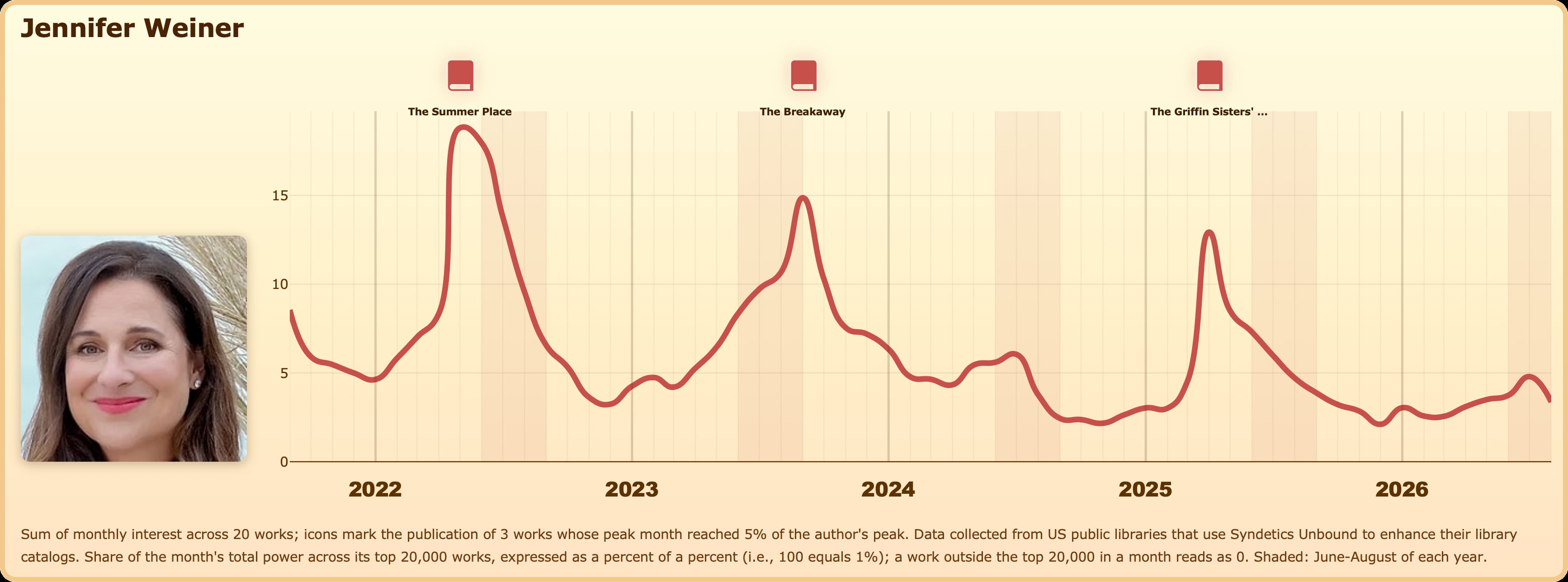
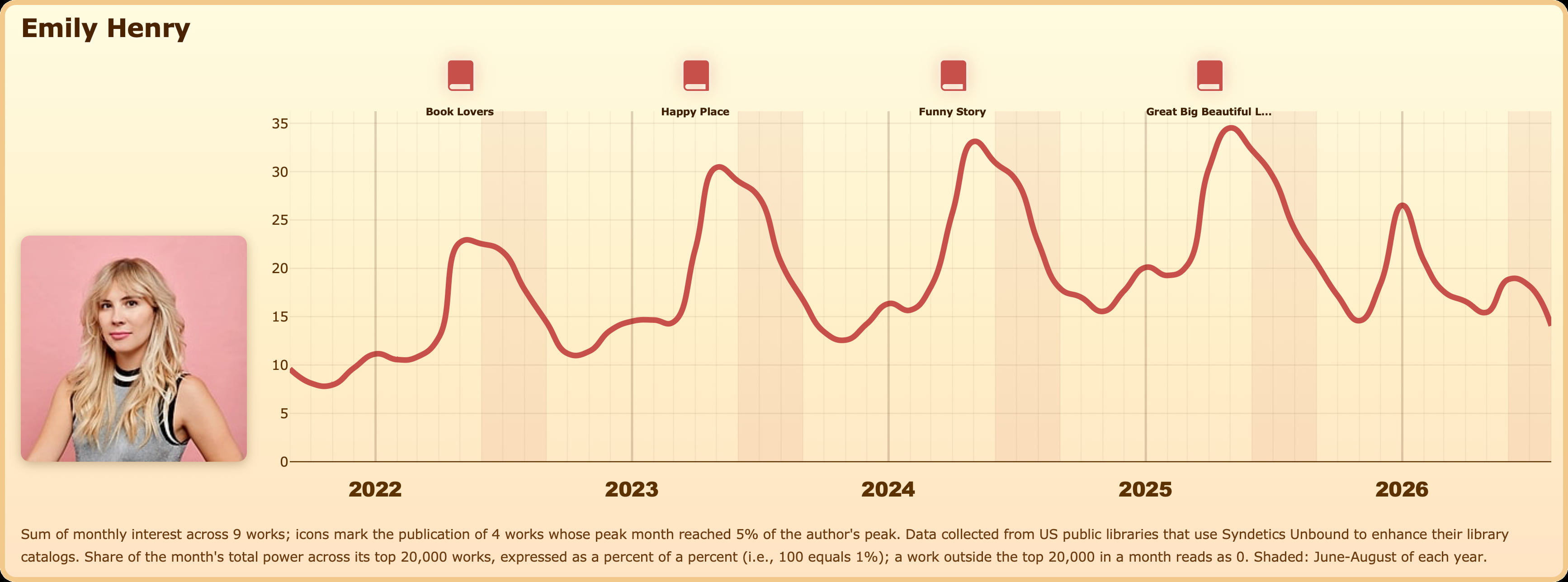
Four other romance authors work the same weeks. Mary Kay Andrews writes Southern beach towns—a fading Georgia resort in Summers at the Saint, Savannah house-flippers in The Homewreckers—and has taken the first week of May in 2022, 2024 and again this year, as she did in 2020 and 2021 before our window. Nancy Thayer sent readers to Nantucket every spring from 2020 through 2025, with “Summer” in five of her six titles, including all four here. Jennifer Weiner published three Cape Cod novels across three consecutive Mays—Big Summer, That Summer, The Summer Place—the last of which opens our window; her two books since have tried August and April. And Emily Henry, who has never once put “summer” in a title, is the only author whose new releases rival Hilderbrand’s—Happy Place, Funny Story and Great Big Beautiful Life each arrive as a wall—and she has managed it with nine books to Hilderbrand’s thirty-six.
Andrews also runs a second calendar: The Santa Suit and Bright Lights, Big Christmas, both with their own bumps in the fall. The seasonal author isn’t a genre. It’s a year-round business with two slots.
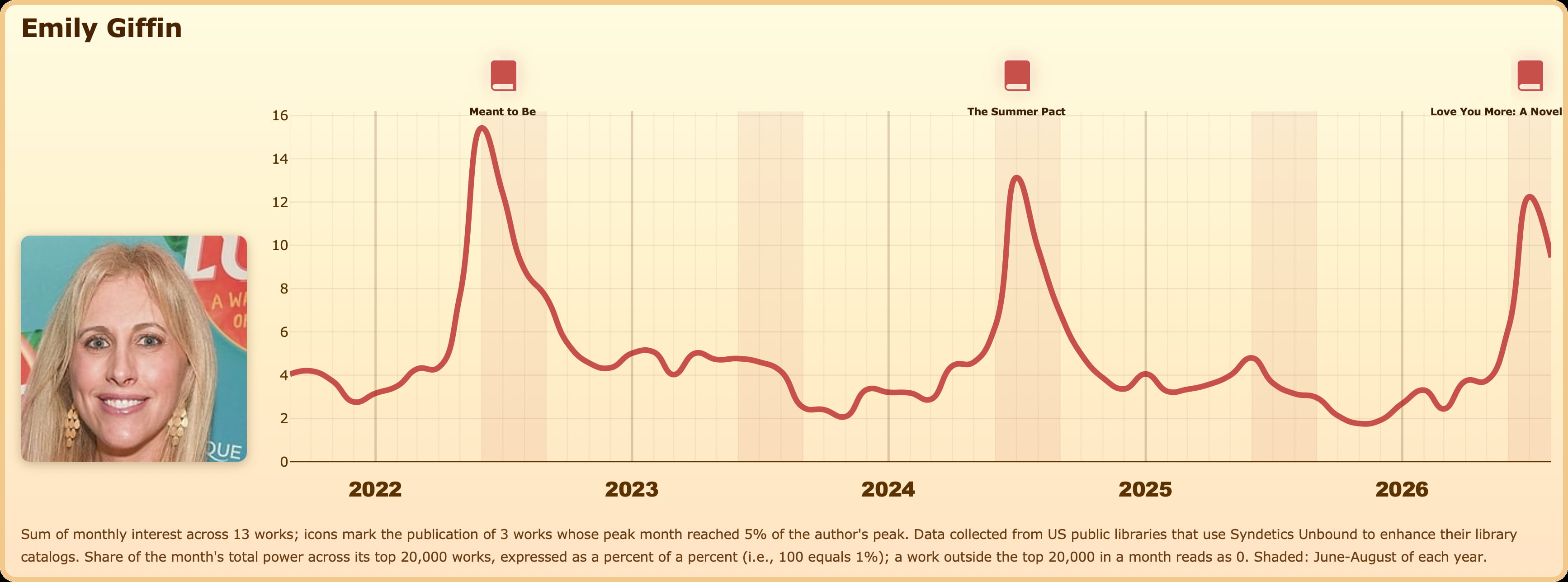
Two more authors stress the pattern. Emily Giffin publishes only every other year, and she has moved later rather than earlier: June in 2020, June in 2022, July in 2024, and now August for Love You More.
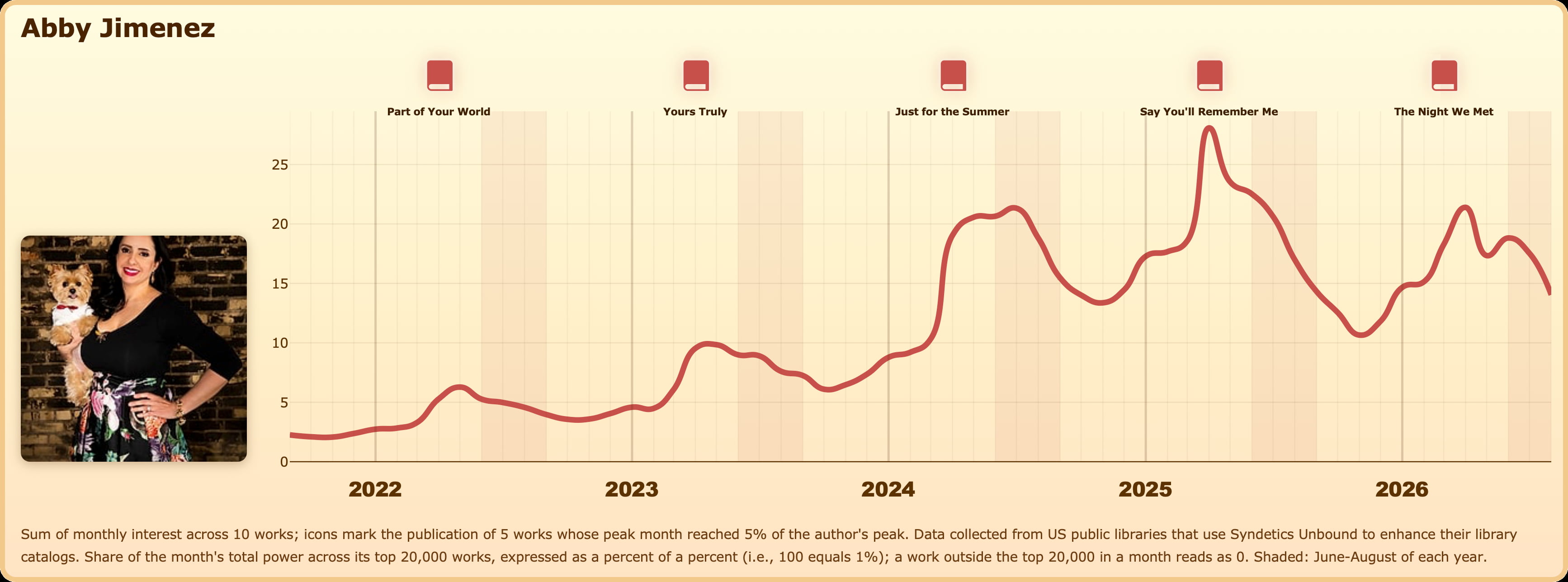
Abby Jimenez is the opposite. She started publishing in early April back in 2020, when her audience was small. Her publishers saw the potential, held the slot, and the audience grew, book over book. Having proved the slot, she has now walked out of it—April 19, April 11, April 2, April 1, and then March 24 for The Night We Met.
The summer thriller works like the summer romance—popular authors, reliable pacing, consistent slot-keeping—but men write more of the books and everything runs about two months later. Romance releases April through June and crests in May and June; thrillers release June through August and crest in July and August.
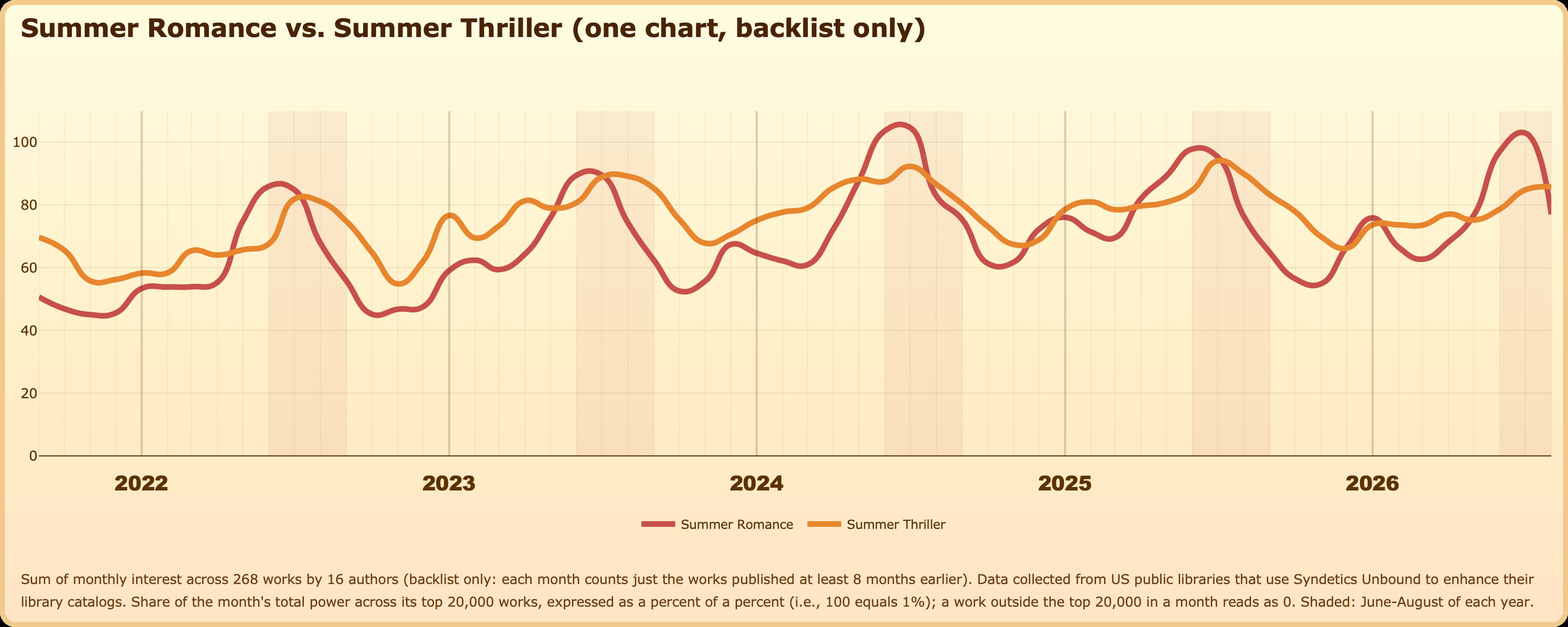
Here’s the summer chart again, but split into romance and thrillers. As the statisticians say—it’s bimodal!
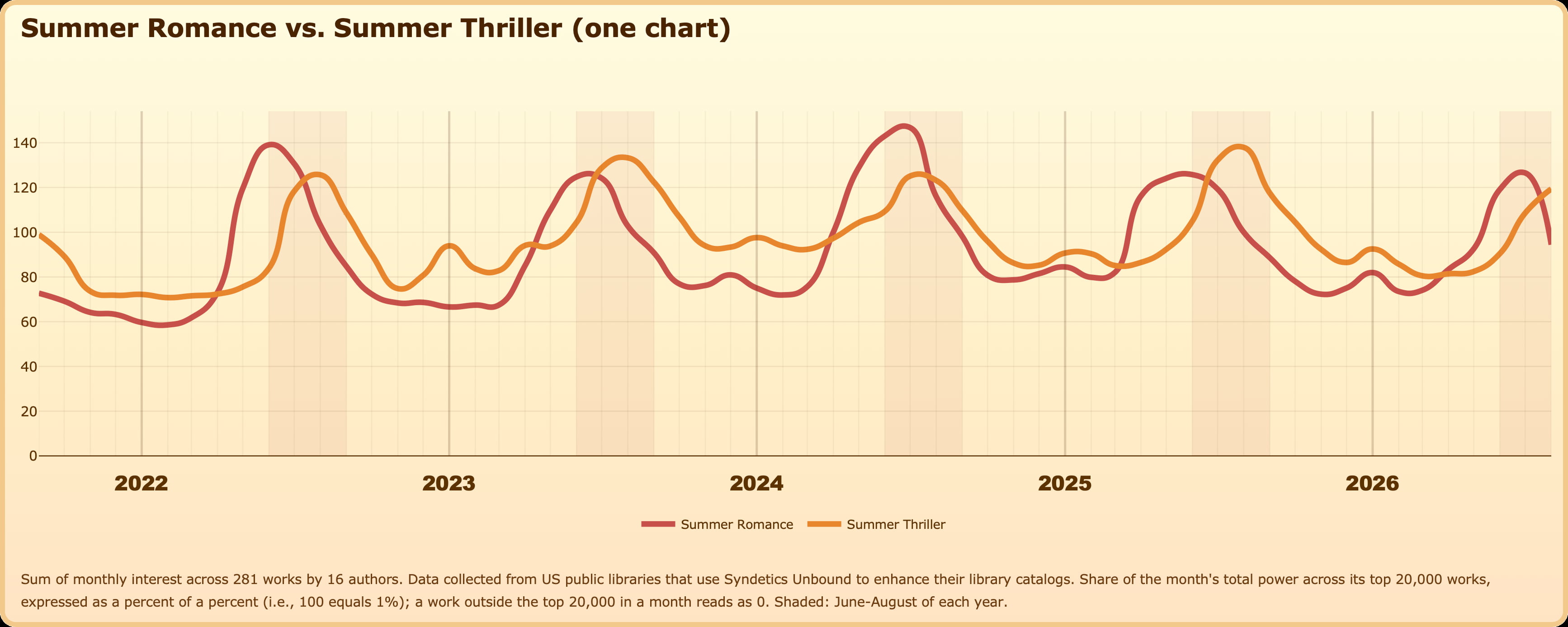
Why does this happen? Perhaps romance is the book you buy while you’re planning the vacation, and the thriller is the one you buy once you’re on it. Or perhaps romances and thrillers capture something about the hope and anxiety many of us experience at the start and end of summer. Even decades later it can be hard to shake the feeling: summer’s almost over and I have to go back to school!
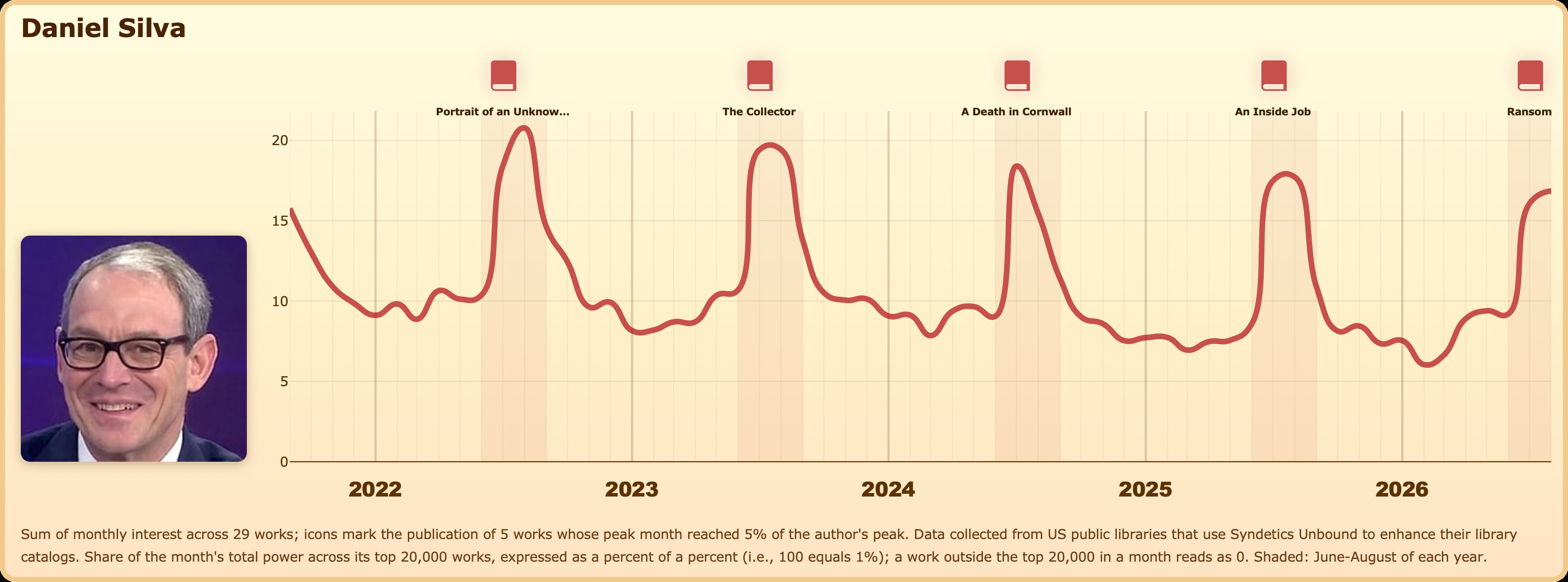
Daniel Silva keeps the longest-running calendar of the group. His Gabriel Allon novels, about an Israeli intelligence officer and sometime art conservator, have arrived every July for a quarter century. The five in our window all landed between July 9 and July 19. An Inside Job (2025) was the twenty-fifth book in the series. His readers know exactly when to look: the line barely moves for eleven months and then stands straight up. Ransom was still climbing when our data ends.
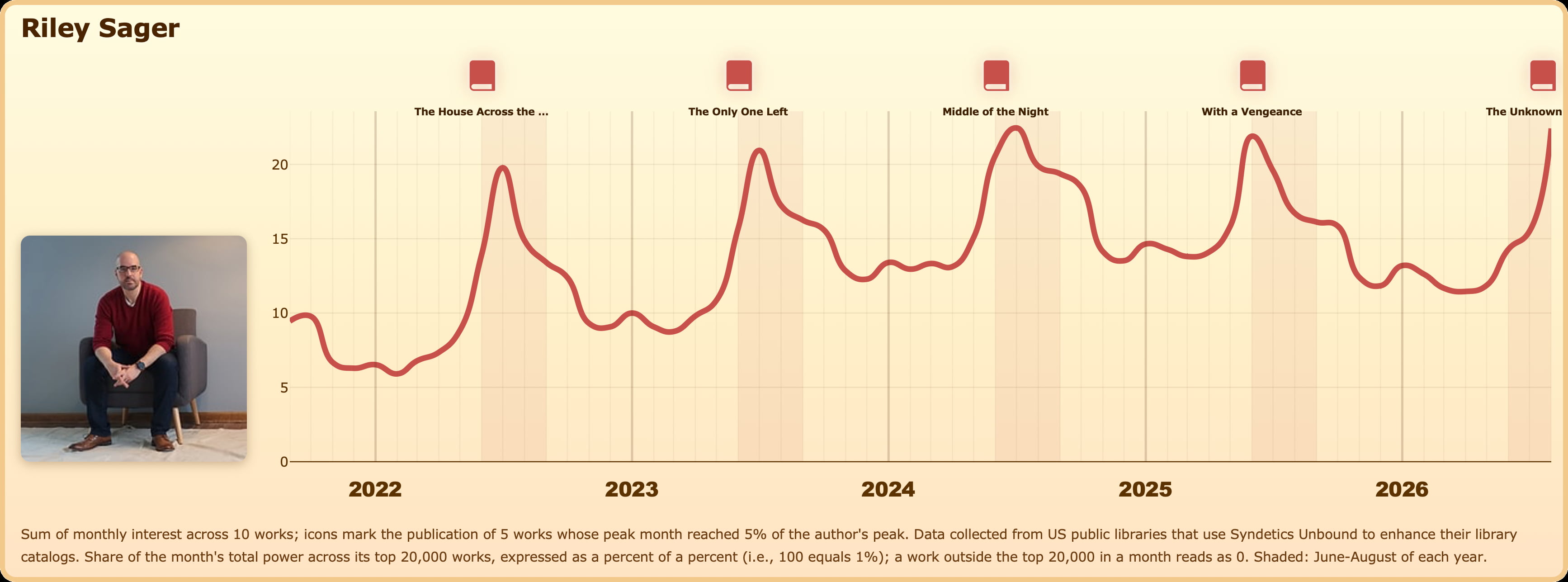
Riley Sager, the pen name of author Todd Ritter, publishes standalone suspense novels that rework a horror trope—a haunted house, a summer camp, a lake house with a view of the wrong window, a night train. He published in June for six years running, but slightly earlier every year: Home Before Dark (June 30, 2020), Survive the Night (June 29, 2021), then in our window The House Across the Lake (June 21), The Only One Left (June 20), Middle of the Night (June 18) and With a Vengeance (June 10). His 2026 novel, The Unknown, broke the streak, arriving August 4—and was already matching his biggest books when our data ends, with its peak still to come.
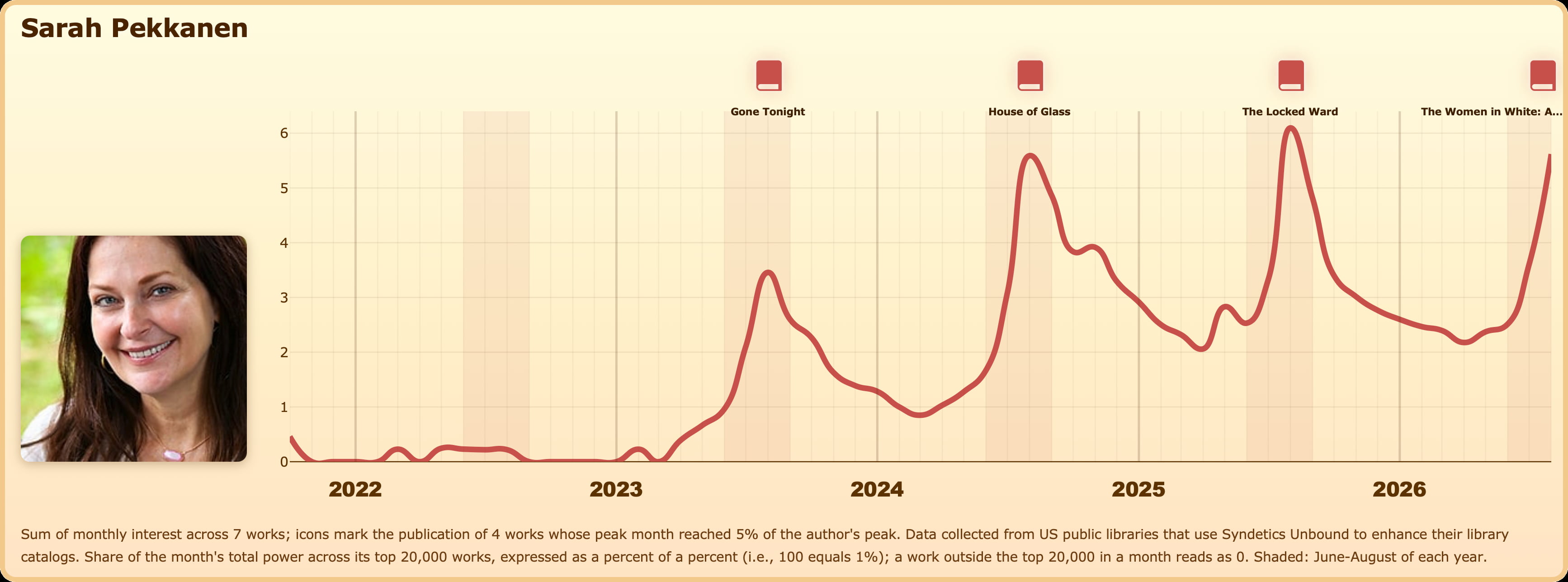
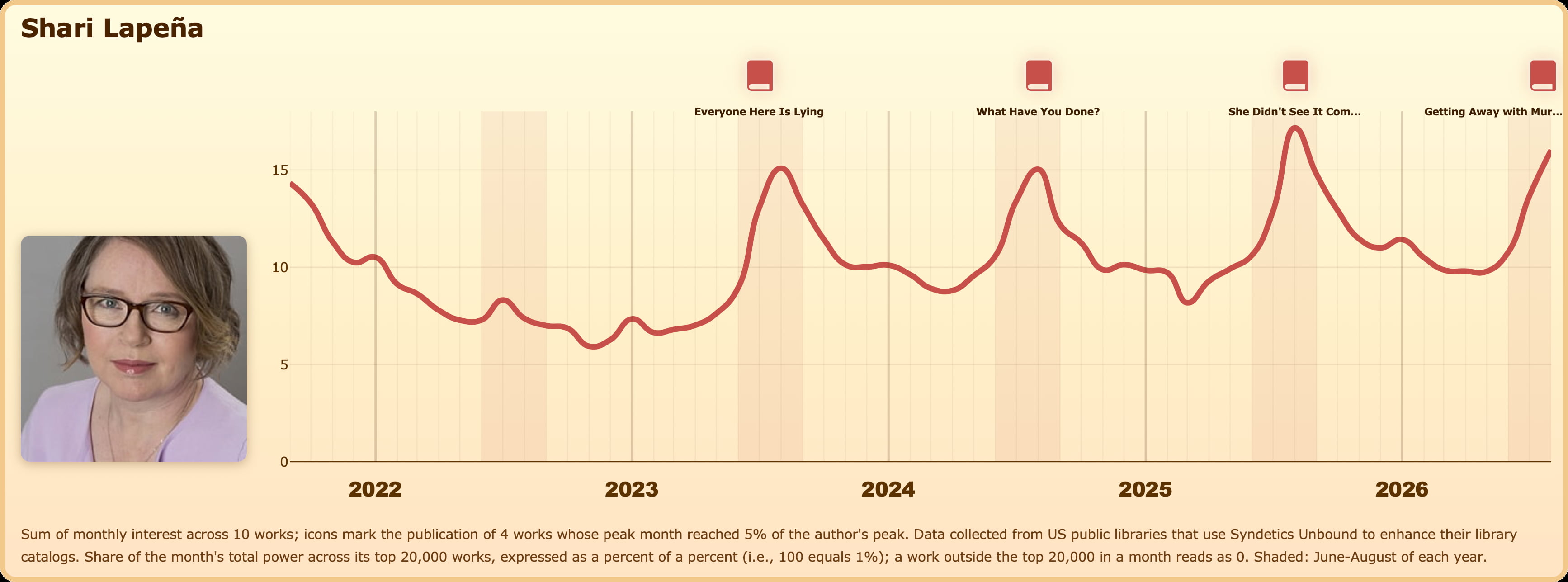
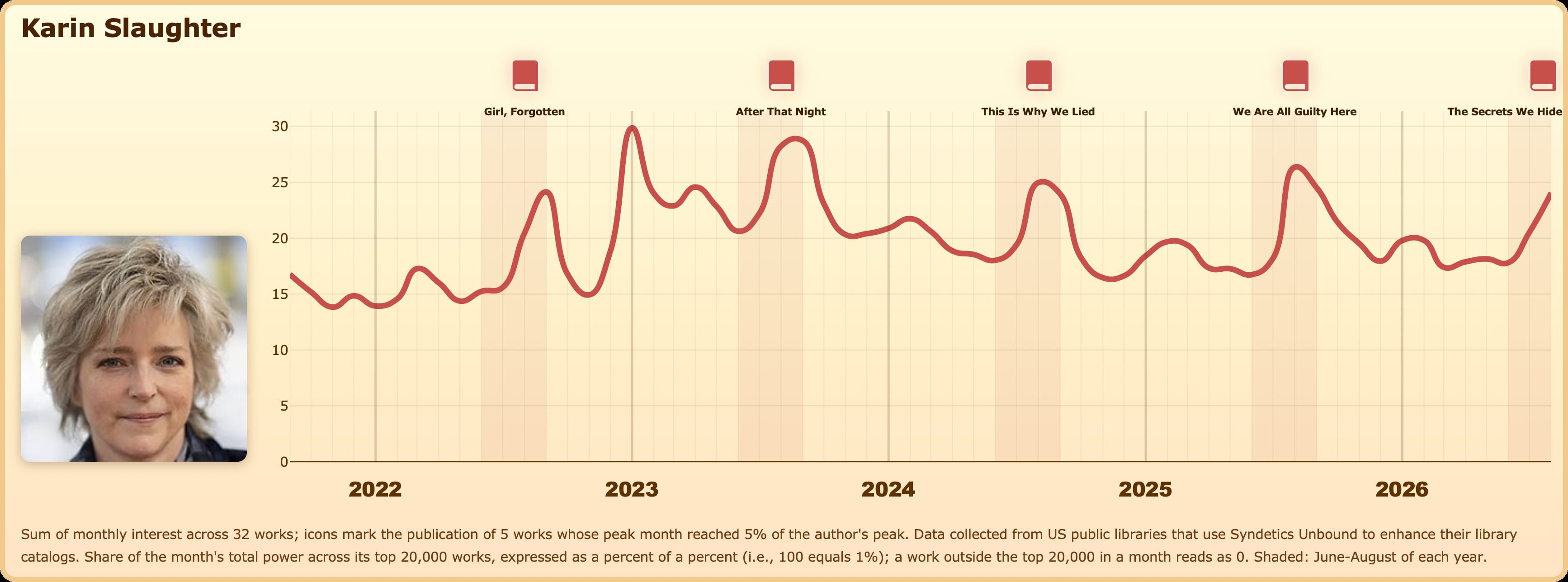
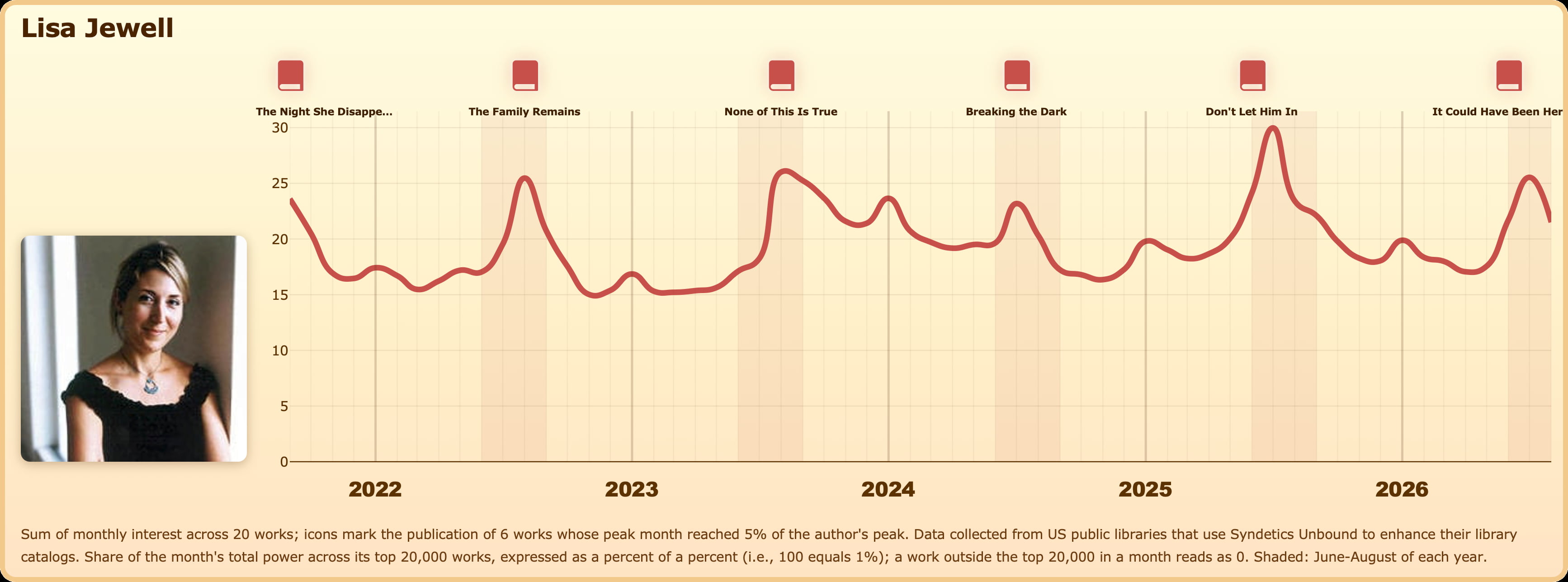
Six more thrillers work the same weeks. Sarah Pekkanen has taken the first Tuesday of August four years running, and Shari Lapeña the last week of July—both inside six-day windows, the tightest in the study. Karin Slaughter has published in August every year since 2022 (and in 2020 and 2021 before that). Lisa Jewell has made the longest march of anyone here, walking from October 2020 to late June 2026: October, September, August, August, July, June, June. Ruth Ware has ranged from May to July, and once—One Perfect Couple, in May 2024—borrowed the romance weeks. And Megan Miranda is the only author who tried the other season—June and July from 2020 to 2022, then April in 2023 and 2024, then back to July. The odd part is that April worked: The Only Survivors is still the biggest book of her career. Neither Ware nor Miranda published a novel in 2026, so their charts end with a quiet summer.
One more bookless spike is worth a look. The tallest point on Karin Slaughter’s chart isn’t a release at all—it’s January 2023, when ABC’s Will Trent premiered and patrons went looking for the series it was based on.
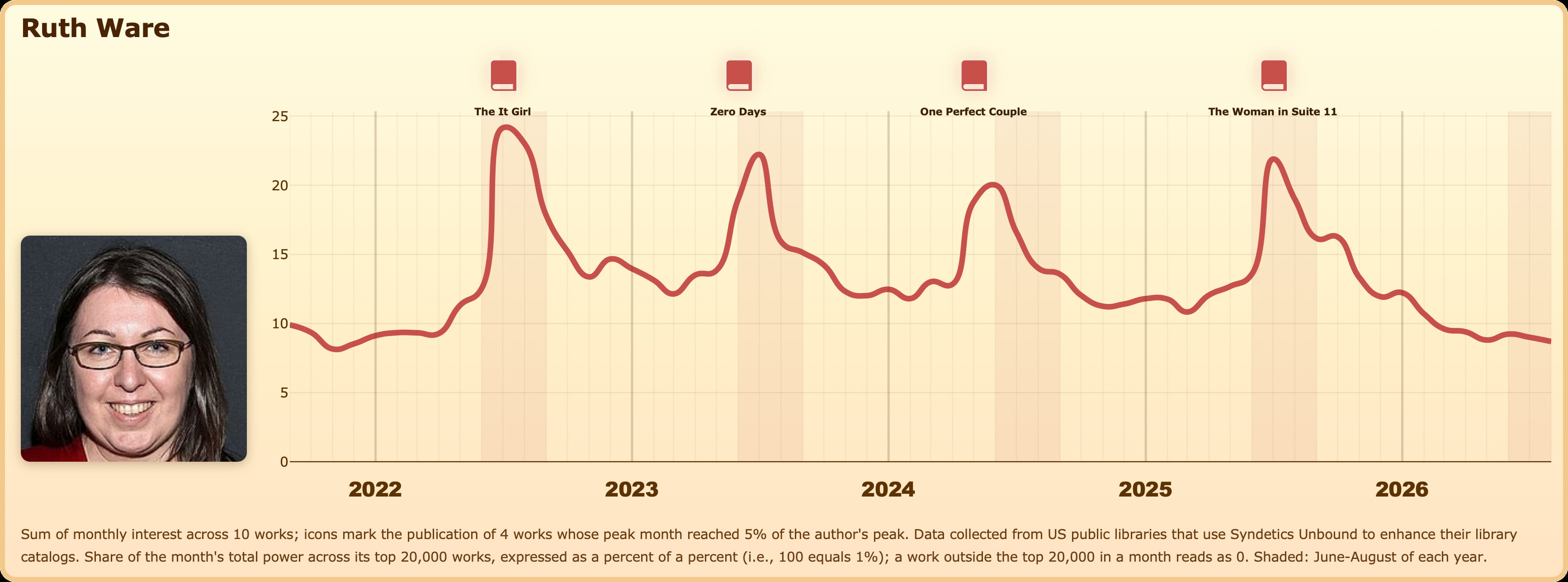
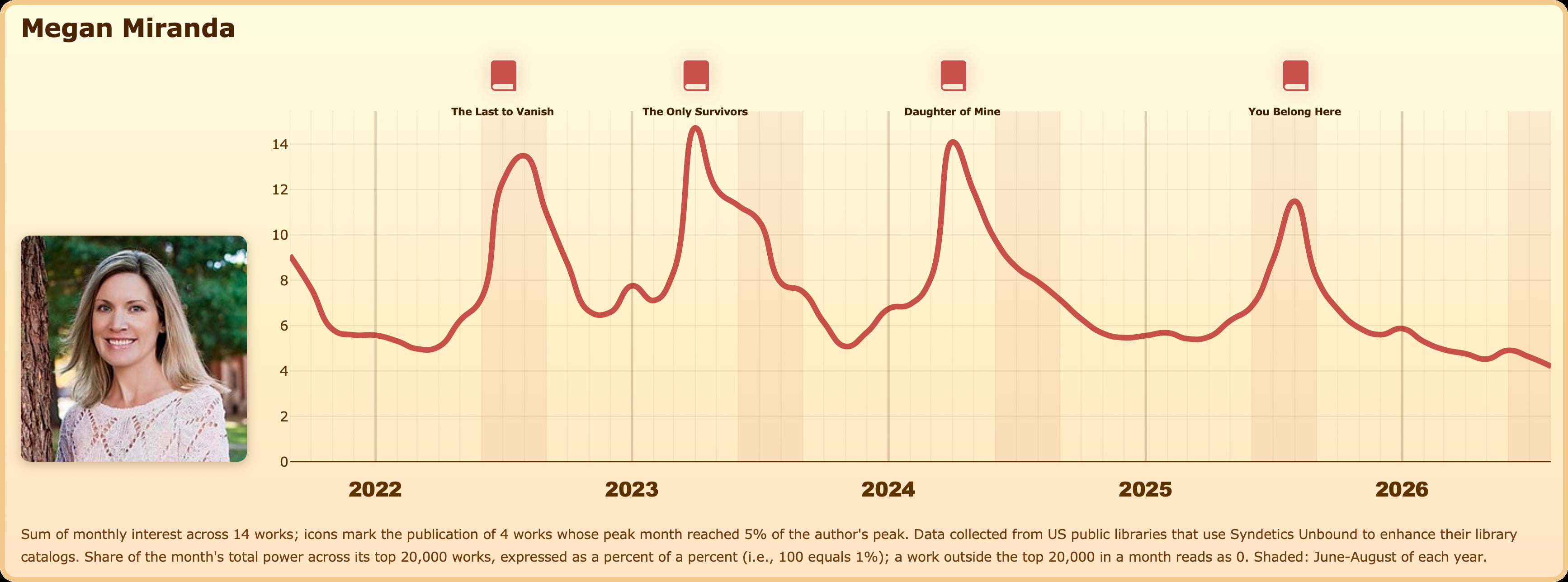
Know who’s reliable. The authors here, and many others, deliver on a schedule. You can plan against it.
Two calendars for new books, one for the backlist. New romance crests in May and June, new thrillers in July and August—so a single new-release display running from Memorial Day to Labor Day may be doing two jobs badly. But the backlist is more unified. Strip out the new releases and the two genres nearly overlap, both peaking in high summer, with thrillers running just a few weeks behind.
Mind the lag. Almost nothing here peaks in the month it publishes. It peaks the month after—Emily Henry’s four novels here do it every single time. That gap is the holds queue: patrons find the record early, and then they wait.
Not just one book. The new book is the star, but don’t forget the back catalog. Look at where Emily Henry’s line settles between books: each new novel leaves the floor higher than it found it, because patrons who came for Funny Story go back for Book Lovers. And when an adaptation lands, the whole catalog moves—Hilderbrand this summer, Slaughter in the winter of 2023—with no new book at all.
And when the holds queue gets long, Syndetics Unbound recommendations turns an unmet hold into a checkout by pointing patrons toward something just as good and on the shelf.
The interest scores in our charts come from anonymized usage data collected from thousands of public libraries across the United States and around the world that use Syndetics Unbound. The data is anonymized on the day it is received. The charts here run from the start of 2022 through August 2026 and show each author’s whole catalog summed by month, with icons marking the new releases that made a visible dent; where we mention 2020 and 2021 books, we’re drawing on the same data from before the charts begin.
This same dataset powers our monthly Top Titles at Public Libraries posts, our annual roundups like Top Syndetics Unbound Titles of 2025, and features like From Screen to Shelf. This post only scratches the surface—with a dataset this rich, there’s much more to explore!